
Real places that look like fantasy worlds often owe their atmosphere to weather, geology and one unusual viewpoint. On Scotland’s Isle of Skye, the Quiraing folds into a chain of green ridges. On Vágar in the Faroe Islands, a lake seems to float over the Atlantic. In Slovenia, a castle is built into the mouth of a cave.
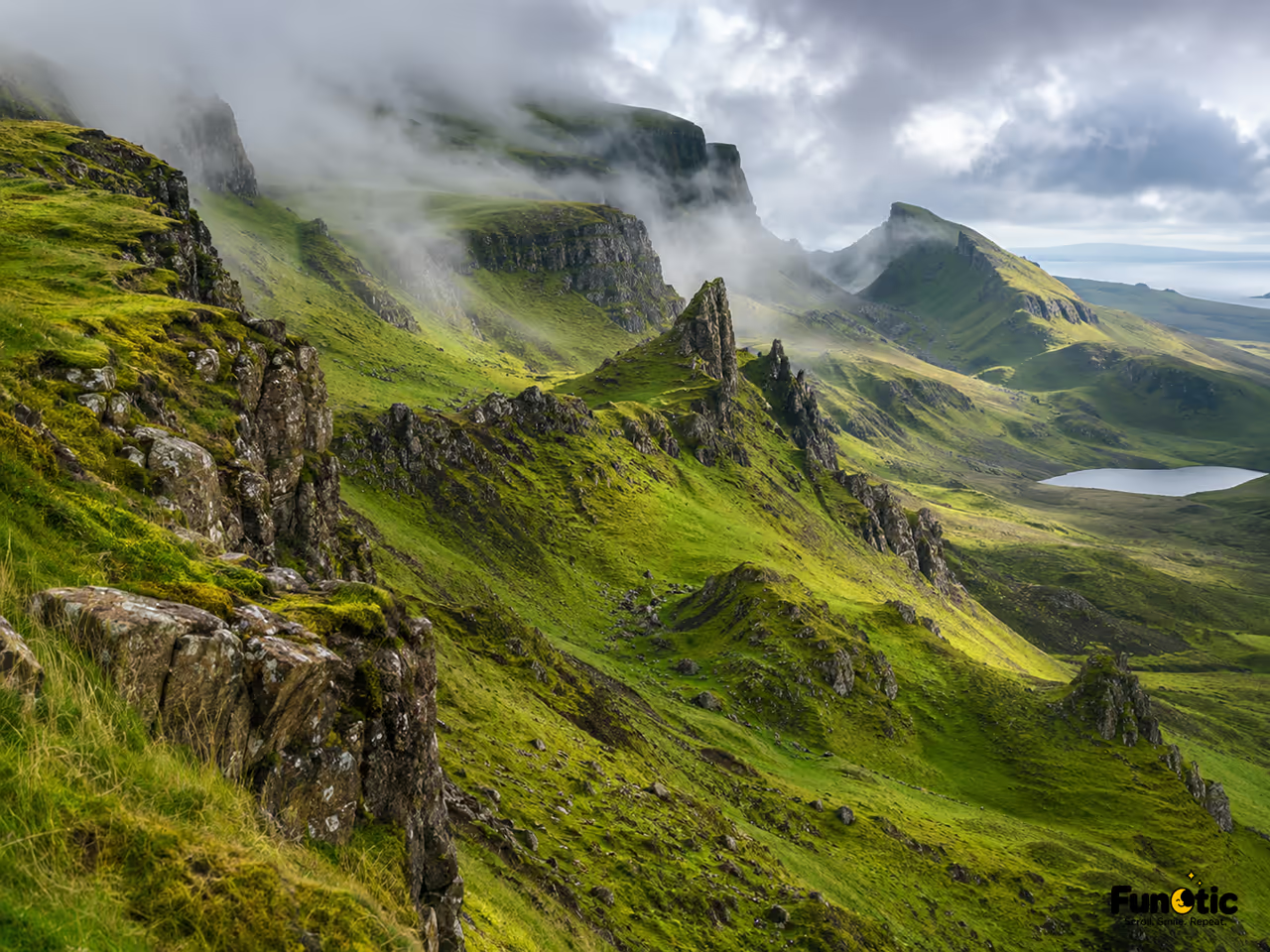
The Quiraing on the Isle of Skye
The Quiraing is a landslip on the Trotternish peninsula. Its steep slopes, rocky pinnacles and narrow green shelves make the landscape feel larger than the path beneath your feet. Low cloud can hide the higher ridges, then reveal a new section as it moves. Clear weather gives a wider view across the peninsula and out toward the sea.
Visitors can take a circular walk from the roadside car park, but the terrain is uneven and exposed. Check local weather and trail information before setting out. Bring footwear with grip, carry water and allow extra time if the ground is wet. If visibility drops, stay on the route you can see and turn back when conditions are uncertain. The landscape changes quickly, which is part of its appeal and a reason to plan carefully.
Photographers often look for a point where the ridgelines overlap. A low camera position can make the rock shapes stand out against the sky. In cloud, keep a clear foreground detail such as a path or a grassy ledge so the image still feels grounded.
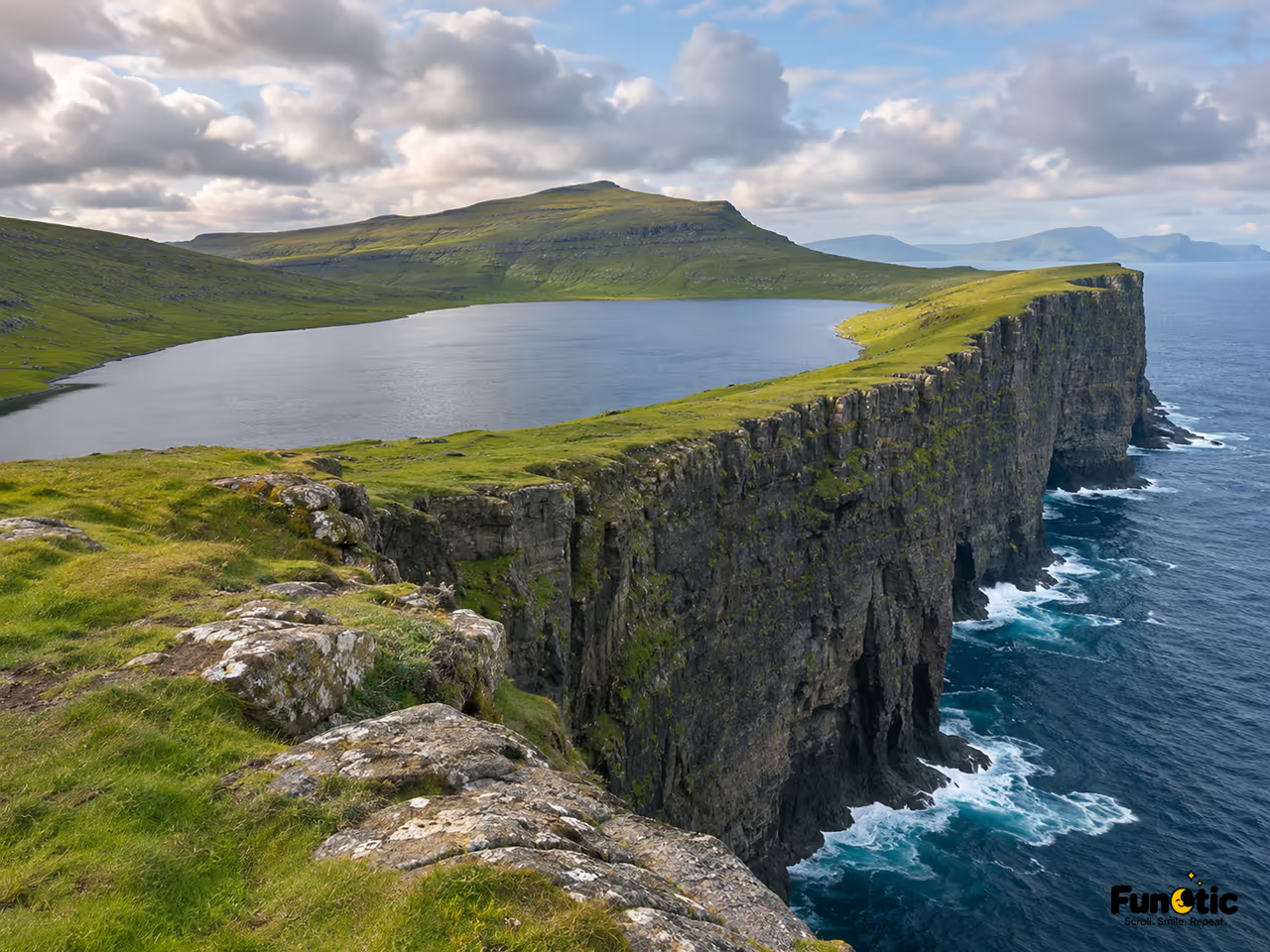
Sørvágsvatn on Vágar
From the coastal path above the sea cliffs, Sørvágsvatn can appear to sit high above the ocean. The effect comes from perspective. The lake, the cliff edge and the Atlantic line up in a way that hides the slope connecting them. From another angle, the difference in height is easier to understand.
The walk to the viewpoint crosses exposed ground and can be windy. Check the route status and weather with local sources before leaving, stay on the marked path and keep a safe distance from cliff edges. Take a wide view first, then a closer frame that includes the lake and a section of the coast. That pair makes the optical illusion easier to explain to someone who has not seen it before.
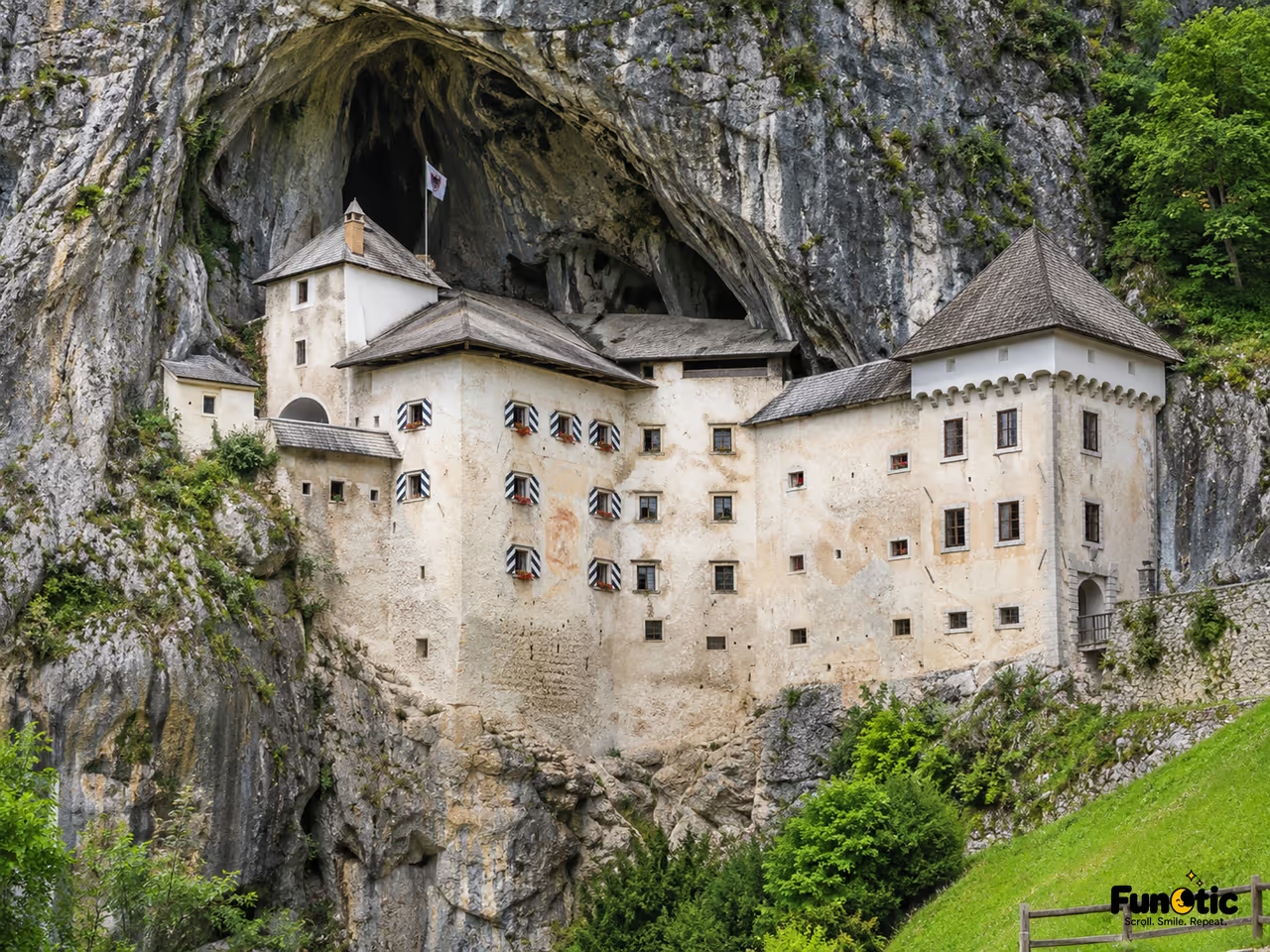
Predjama Castle in Slovenia
Predjama Castle stands at the mouth of a cave below a high limestone cliff. From the front, parts of the building seem to merge with the rock. Look closely at the stonework around the cave opening to see how the natural shelter shaped the structure. The castle is a real historic site, and its setting is what gives the visit its storybook quality.
The official Predjama Castle visitor information lists access and tour details. Check seasonal hours before traveling, and confirm whether the cave or castle tickets require a separate booking. A view from below shows the scale of the cliff, while a closer visit reveals the way the rooms meet the cave.
How to explore places that feel like fantasy worlds responsibly
These real places that look like fantasy worlds are popular because photographs make the scenery easy to share. They are also working landscapes with changing weather, fragile paths and local communities. Travel outside the busiest hours when possible, follow signs, take rubbish away and avoid stepping onto vegetation for a better camera angle.
Pack a light rain layer even when the forecast looks promising. Keep your phone charged, save directions offline and tell someone which trail you plan to take. For the Faroe Islands and Skye, weather can affect visibility and transport, so allow a flexible day rather than a tight connection.
Pinterest’s 2026 trend report points to interest in remote, atmospheric destinations such as the Scottish Highlands and Faroe Islands. These landscapes are a good reminder that fantasy worlds can be real places, while still needing ordinary visitor care. Find more routes in Funotic’s Travel section.