
A sleep tracker can show estimated stages and movement, but a seven-night test is most useful when you compare its estimates with how rested you feel. A simple scorecard can help reveal patterns. It cannot establish medical sleep quality or diagnose a sleep disorder.

Run the sleep tracker scorecard
Most consumer wearables infer sleep from signals such as movement and heart rate rather than directly measuring brain activity the way a laboratory sleep study does. Research comparing commercial devices with polysomnography has found that performance varies by device and metric. A tracker may be more useful for broad patterns than for treating a single night’s deep-sleep estimate as a precise measurement.
Run a seven-night personal comparison
Each morning, before checking the app, write down your bedtime, approximate time you fell asleep, wake time, number of remembered awakenings and a rested feeling from one to five. Then record the tracker estimates. Keep your usual routine; deliberately changing sleep habits during the week makes the comparison harder to interpret.
| Night | Hours you estimate | Tracker estimate | How rested? / 5 | Notes |
|---|---|---|---|---|
| 1 | ||||
| 2 | ||||
| 3 | ||||
| 4 | ||||
| 5 | ||||
| 6 | ||||
| 7 |
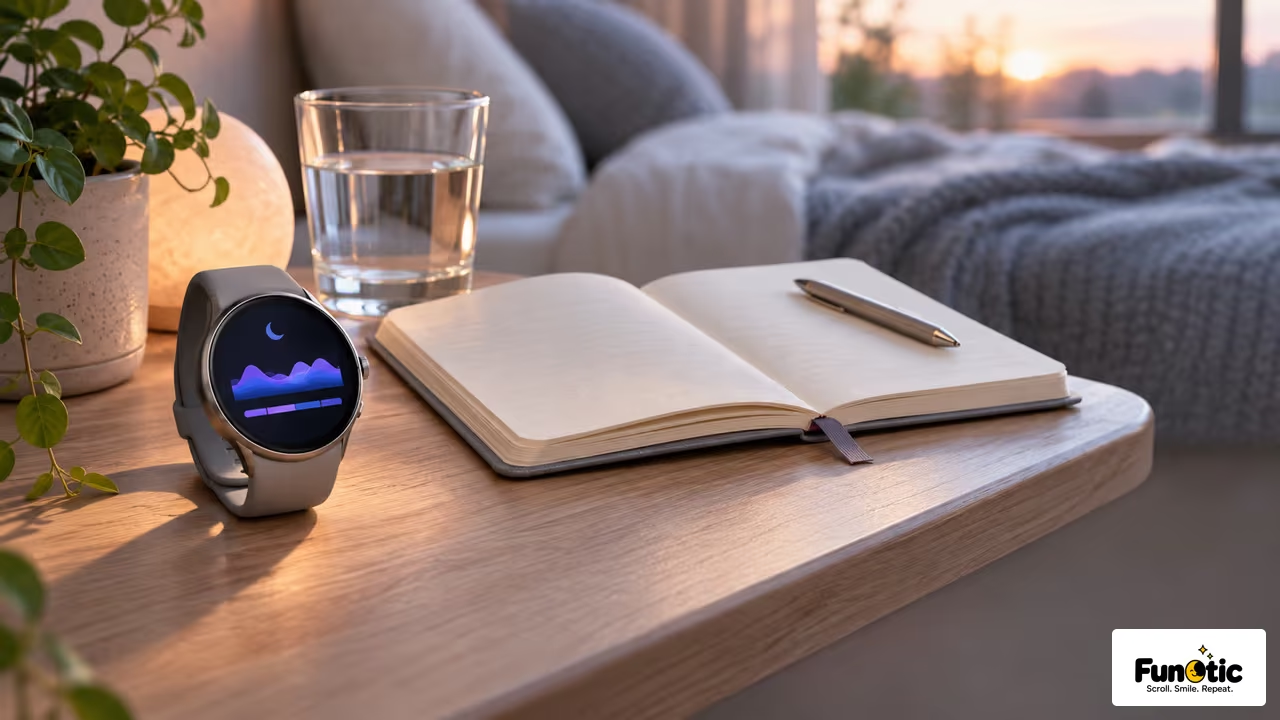
Look for trends, not a perfect match
After a week, ask whether the device’s broad estimate usually moves in the same direction as your own notes. Did you feel more rested after nights with a longer sleep window? Did the tracker flag a short night that you also remember as difficult? Note possible influences such as travel, late work, alcohol, illness or a noisy room rather than treating the score as the only explanation.
A 2024 study comparing five consumer sleep devices with research-grade actigraphy and polysomnography illustrates why the exact model and metric matter. AASM’s position statement also cautions that consumer sleep technology is not a substitute for medical evaluation. If sleep problems are persistent or affect daily life, talk with a qualified health professional instead of trying to diagnose yourself from an app.
Keep the experiment low pressure
If checking the score makes you anxious, pause the tracking or hide the nightly result and keep only the journal. The point is to learn whether a tool helps you understand your routine, not to chase a perfect number. Do not change medication or treatment based on a consumer tracker reading.
Readers can use the same scorecard with different devices and share the pattern, while clearly identifying the model, app version and dates. For a relaxing travel idea that puts rest at the center, see Funotic’s sleepcation planning guide.
A tracker is one perspective on a night. Your notes add context that the graph cannot see.
Sources: 2024 consumer sleep-tracker comparison study, American Academy of Sleep Medicine position statement.
For more coverage of sleep, well-being and daily routines, browse Funotic’s health guides.