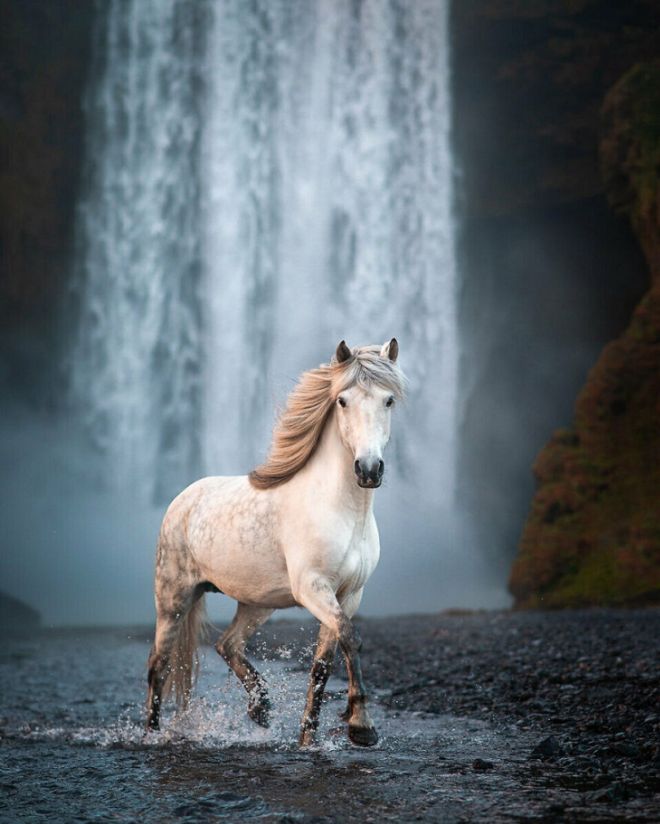

The best cat in a box photos often happen after you stop pointing the camera at the box. Leave an open cardboard box on the floor near a window and see if your cat investigates. Have your phone ready, but give them room to come and go.
1. Frame the first peek
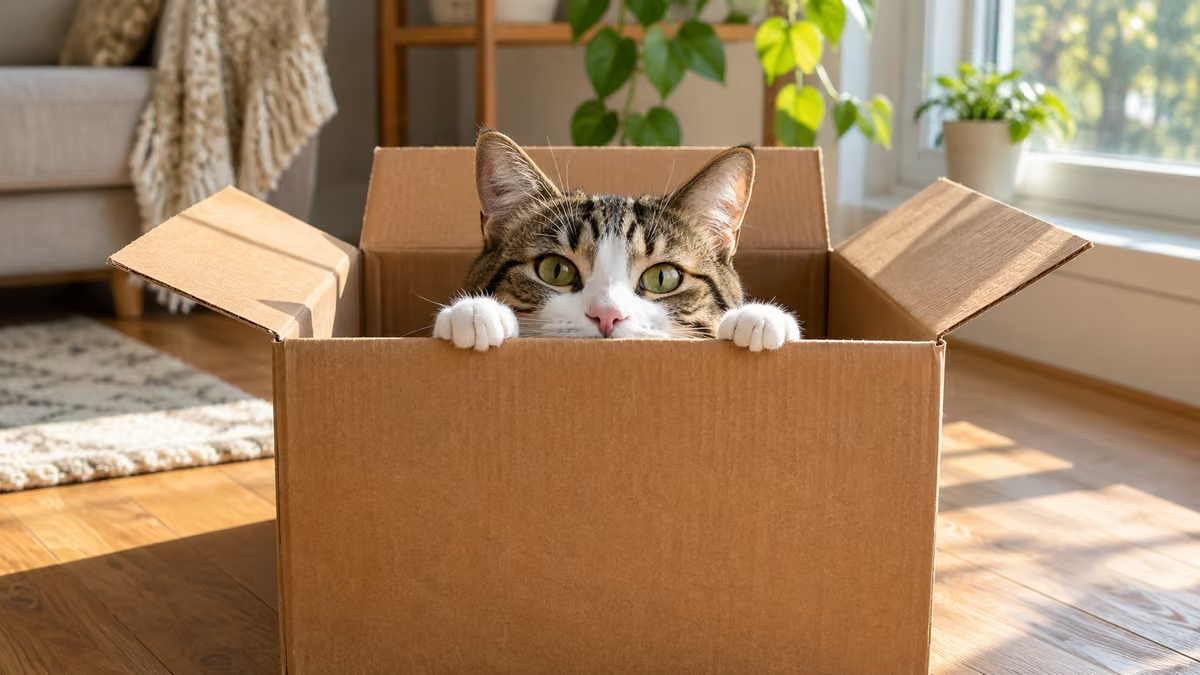
Sit far enough back that you can see both corners of the box. When an ear appears, frame a little higher than you think you need to. Cats can go from two ears to an entire face in less time than it takes to move the phone. Try a short burst if your camera has one.
If the box is near a wall, take a step to one side and see how the light changes. The brighter side of the face will usually give you a better place to set focus. Try leaving some empty space in the direction your cat is looking. It gives the viewer a sense of what might have caught their attention.
2. Get down to the level of the rim
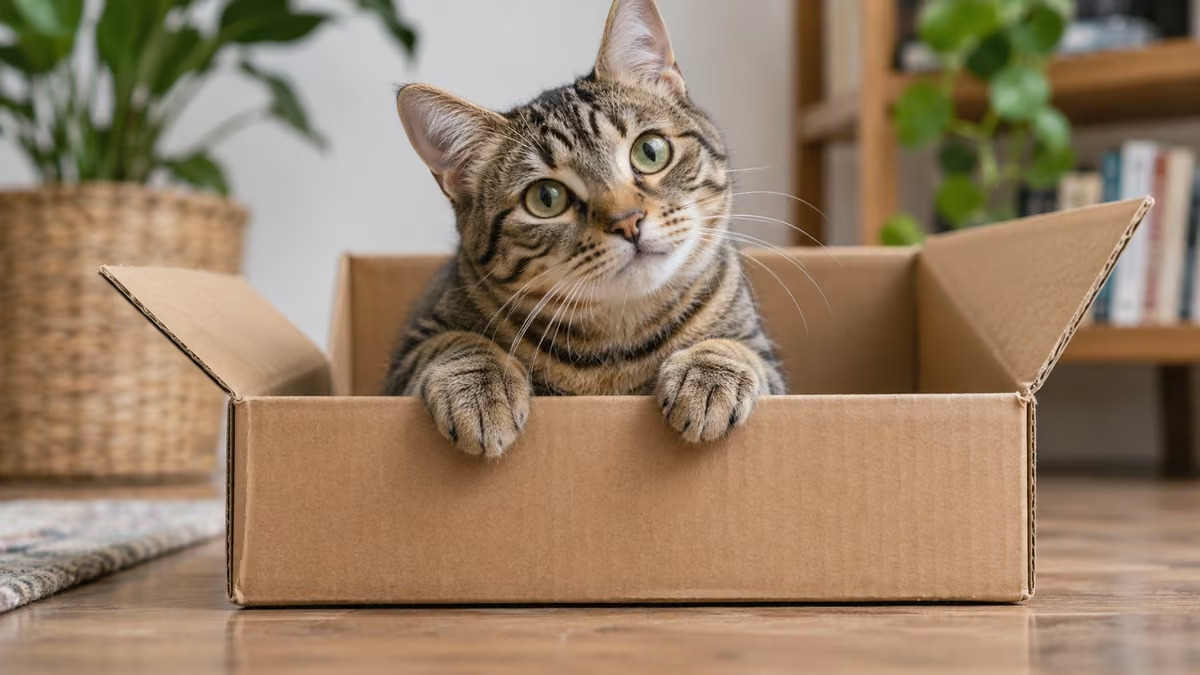
Put the phone low enough that the front edge of the box runs across the lower part of the frame. From this angle, you may see whiskers over the edge or one paw resting on a flap. Tap the nearest eye to focus. If the camera keeps picking the cardboard instead, pull back slightly and try again.
Keep an eye on the corners of the frame. A dangling cable or a bright sock may be easy to miss while you are watching the cat. A small move to the left or right can often hide it behind the box. You can also use a slightly wider frame and crop after your cat has wandered off.
3. Photograph the quiet moment
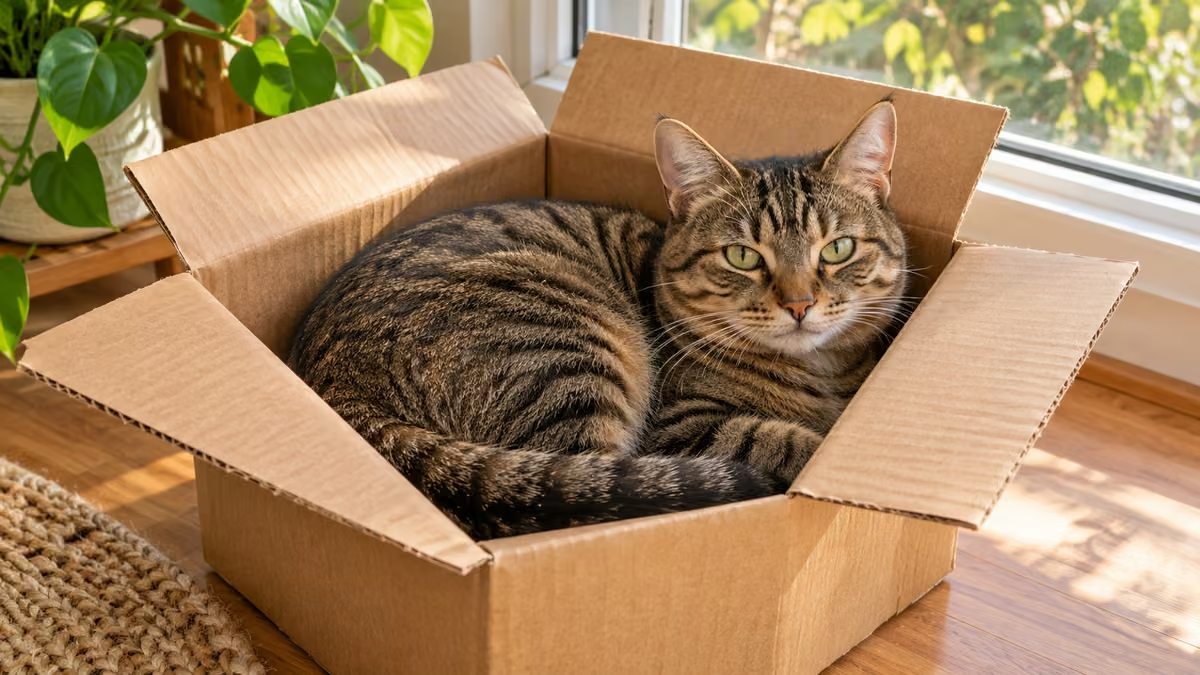
If your cat settles in, take a photo from above and another from just beside the box. The first shows how neatly they fit. The second catches the whiskers and the curve of their back in the window light. Keep the phone far enough away that you are not crowding them.
Pick a set that shows three different moments. The first peek, the paw on the rim, and the nap tell a little story even if they all happened in the same corner of the room.
Before taking cat in a box photos
Choose a box wide enough for your cat to turn around in. Remove loose tape, staples and packing material, and leave the flaps open. Put the box on a level floor where it will stay put if your cat steps on the edge. If they choose the sofa instead, leave the box there and try again when they come back on their own.
A window off to one side is a good place to start. On a bright day, a sheer curtain can soften the light. Check the white fur on your screen if your cat has it. If you cannot see any texture, lower the exposure a little and take another frame. On a darker day, pull back a bit so the phone has an easier time focusing.
Try a wide photo before you move closer. It can show how small the box looks in the room or how much of it your cat has managed to fill. Then take a tighter shot of the face or paws. The two frames are easier to tell apart when one shows where the cat is and the other shows what the cat is doing.
When you pick the final set, look for a change in expression or posture from frame to frame. You may have ten nearly identical peeks and one frame where your cat turns toward the light. Keep that one. If you missed the nap, finish with a different quiet moment, such as the cat sitting beside the empty box.
For more pet photo ideas, browse the Comedy Pet Photography Awards gallery. If you use an iPhone, see Apple’s guide to Burst mode.