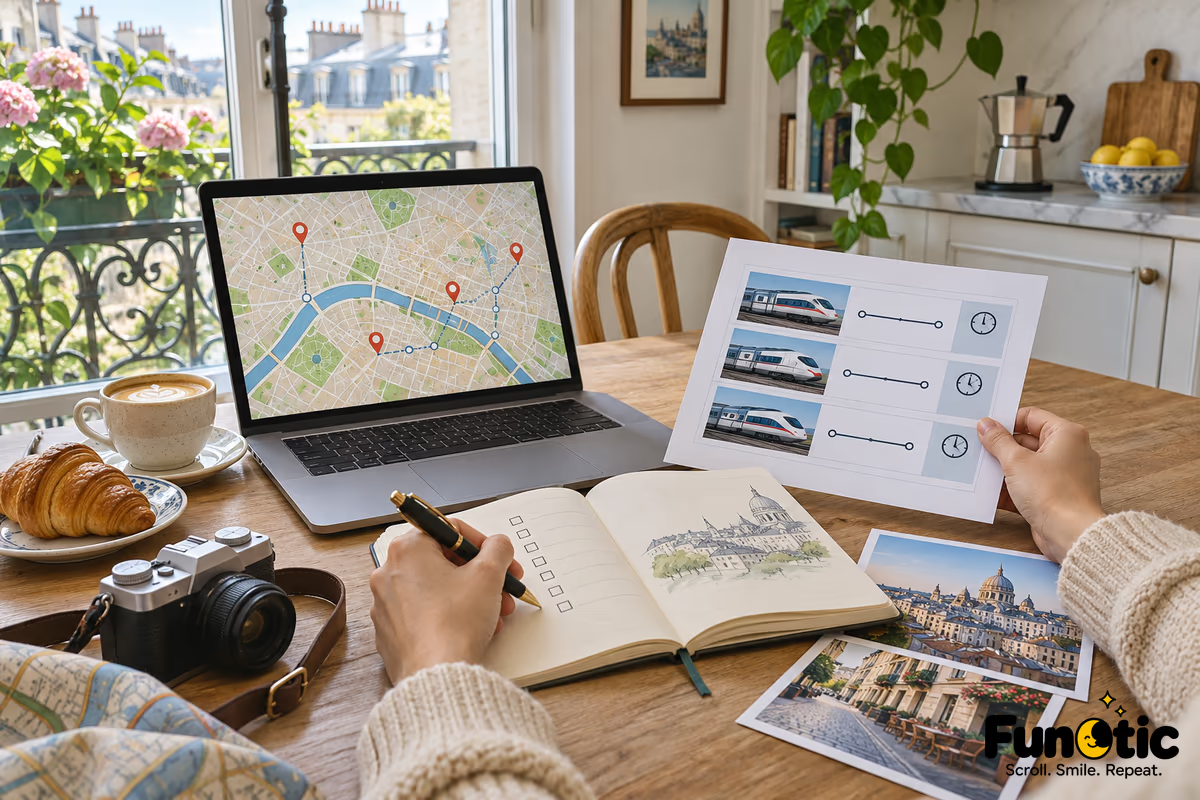

A flexible city break does not need a minute-by-minute itinerary. Leave a little room for the unexpected and you can still make the important parts easy: a sensible base, a few anchor plans, and enough time to follow something that catches your eye.

Plan a flexible city break with three useful anchors
Start with location rather than a long list of attractions. For a flexible city break, choose a neighborhood that keeps your first plans easy to reach. A hotel or rental near a central transit stop gives you options when the weather changes or a neighborhood turns out to be more interesting than expected. Check the last train or bus back, luggage storage, and the cancellation terms before paying. Those details give spontaneity a practical boundary.
Booking.com’s 2027 travel predictions point to travelers wanting more flexibility and room to shape a trip around personal interests. Treat that as a useful signal, not a promise that every unplanned choice will be cheaper or available.
Make three anchors, not a full schedule
Pick one dependable plan for each day: perhaps a timed museum ticket, a meal reservation, or a show. Then add two loose options nearby. Save their opening hours and addresses offline. If your first choice is busy, you have a nearby alternative without spending the afternoon scrolling.

For getting around, compare walking time with transit rather than choosing whichever looks fastest on a map. A short local train ride can be part of the experience. Our guide to planning a scenic train day trip has ideas for making the journey itself part of the outing.
Leave a real pocket of open time
Keep at least one block of two or three hours unbooked. Use it for a street market, a riverside walk, a small gallery, or a cafe recommended by someone who lives there. If nothing stands out, take a comfortable route through a district you have not seen. A good break does not require turning every free hour into an assignment.
A simple rule helps: decide the first stop the night before, then choose the next one after lunch. You will keep enough structure to avoid wasted time while allowing the day to respond to how you feel.
Set a spending limit before the trip
Flexible travel can become expensive when every change is made at the last minute. A flexible city break can stay within budget when you set a daily range before you go. Set a daily range for meals, local transport, and optional activities. Reserve the parts that commonly sell out, but check whether flexible tickets are worth the difference. Keep a small buffer for an unexpected cab or a spontaneous event, then stop browsing once the day’s budget is reached.

Use a short checklist before leaving
- Save accommodation details and offline maps.
- Check opening days, transit service, and the return route.
- Book only the experiences that need a time slot.
- Keep one open block in the plan each day.
- Set a spending range and a weather backup.
An off-script city break is not the same as arriving without a plan. It means preparing the few details that protect your time, then staying open to the rest. Choose a walkable base, keep a couple of reliable options nearby, and let the city supply the next idea.
Before you go, check the forecast for the hours you will be outside and pack one layer that handles a change in temperature. In cities with frequent showers, a compact umbrella and shoes that can cope with wet pavements are more useful than carrying a full outfit for every possibility. Save the nearest indoor alternative to your main outdoor plan.
If you are travelling with companions, agree on one simple check-in point in case someone wants a slower afternoon or a different activity. A flexible day works best when each person knows the shared anchor and can choose how to spend the open hours around it.