
A pen pal habit can begin with one short letter and a reliable address. You do not need elaborate stationery or a perfect story to tell. Pinterest named Pen Pals among its 2026 trend themes, describing a renewed interest in decorated envelopes, stamps and handwritten notes. The Pinterest Predicts report offers the trend context, while the practical part is simply making time to write and send something personal.
Start a pen pal habit with a small letter kit
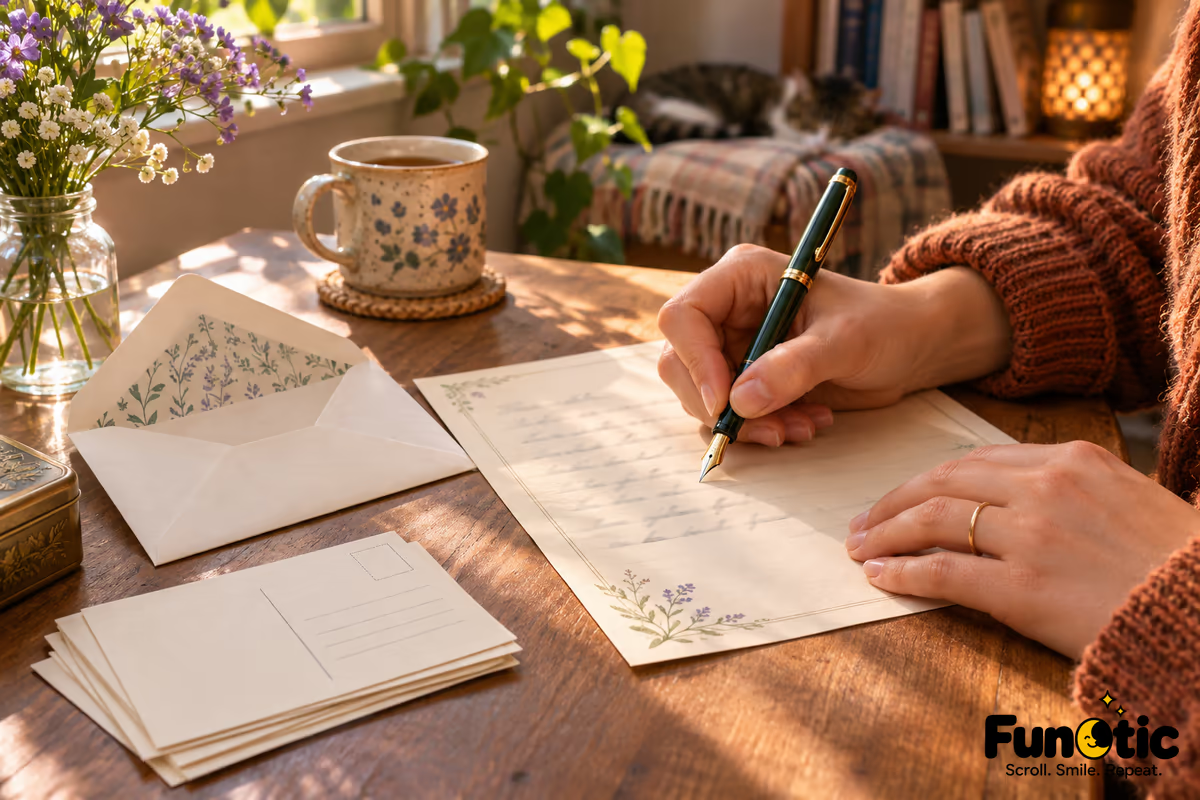
Start with paper, envelopes, a pen you like and a few stamps. A notebook can hold addresses and a note about when you last wrote. Keep the supplies together in a folder or small box so it is easy to begin. If you enjoy decorating, add a sheet of stickers or washi tape, but leave room in the envelope and avoid anything that makes it difficult to mail.
Check postage rules before sending anything bulky or unusually shaped. Postal rates and size limits vary by country and can change, so confirm the current details with your postal service. For a first exchange, a standard letter or postcard keeps things simple. A pen pal habit is easier to maintain when your supplies are ready and your expectations are modest.
Find a safe way to connect
Ask a friend if they would like to exchange occasional letters, or use a moderated pen pal group or established letter exchange. Read the group’s age and privacy rules before joining. Share only the contact details needed for mail, and do not include sensitive personal information in an early letter. For younger writers, involve a parent or trusted adult in choosing a suitable program.
Some people write to friends they already know, while others use postcard exchanges or supervised community programs. The Associated Press has reported on pen pal programs continuing in a digital world, including organized exchanges that connect writers across distances. Its report on modern pen pal programs is a useful example of how a correspondence can begin through a community rather than a random contact.
Make the first note easy to answer
Introduce yourself in a few lines, then share one small detail from the week. You might describe a meal you tried, a place you walked or a song you have been listening to. Add two or three open questions, such as what the other person likes to cook or what they do on a quiet weekend. Questions with room for a story work better than a long list of yes or no prompts.
Do not feel pressure to fill every inch of the page. A short letter is still a real letter. If you want to include a drawing, photo or postcard, choose something you are comfortable sharing and check that it fits the envelope.
Set a rhythm you can keep
A pen pal habit is easier to keep when both writers agree on a relaxed pace before the exchange becomes a source of pressure. Monthly letters or occasional postcards may suit both writers better than a promise to write every week. A reply can take time to arrive, especially across countries, so keep expectations flexible. If you need to pause, a brief note is kinder than disappearing without explanation.
Add a little mail art if it is fun
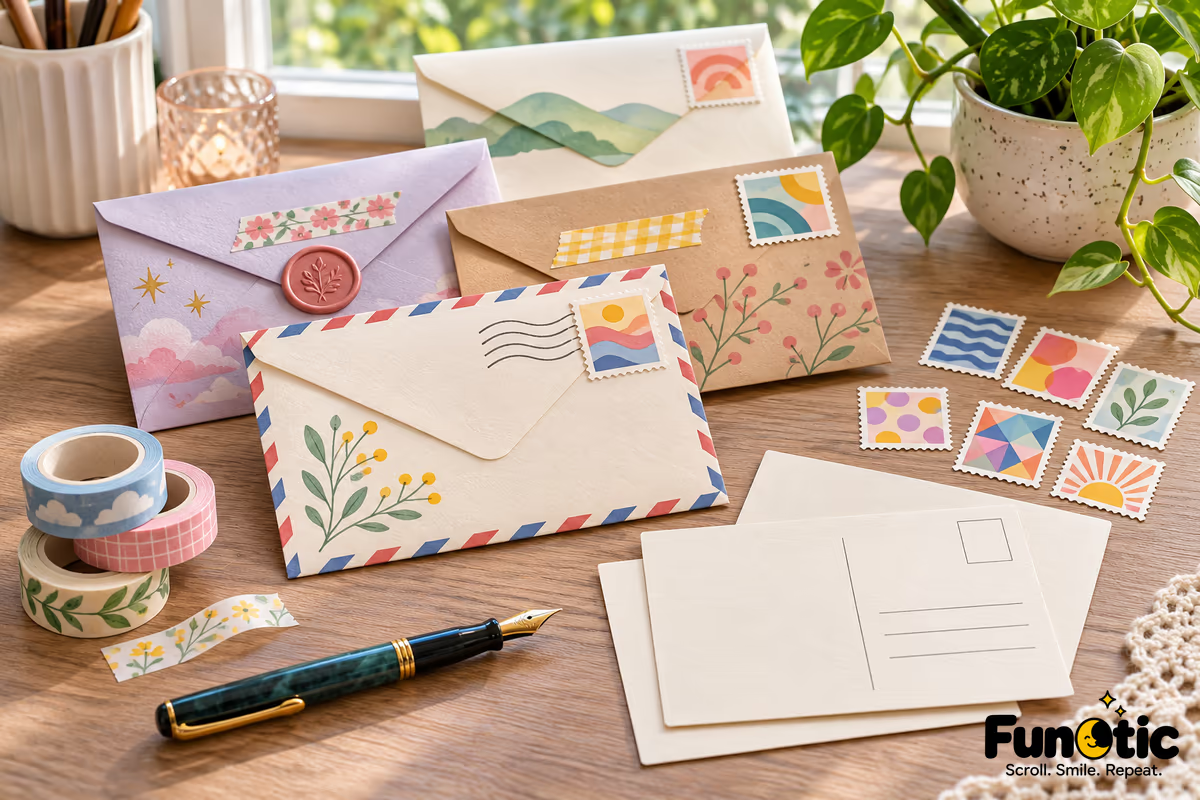
Decorate the envelope with a small pattern, a sticker or a hand drawn border. Make sure the address and postage remain easy to read. Save elaborate folds and extra inserts for later, after you know what the recipient enjoys and what the postal service accepts. The image of a handmade envelope is part of the appeal, but a clear address helps the letter get there.
Keep the habit personal
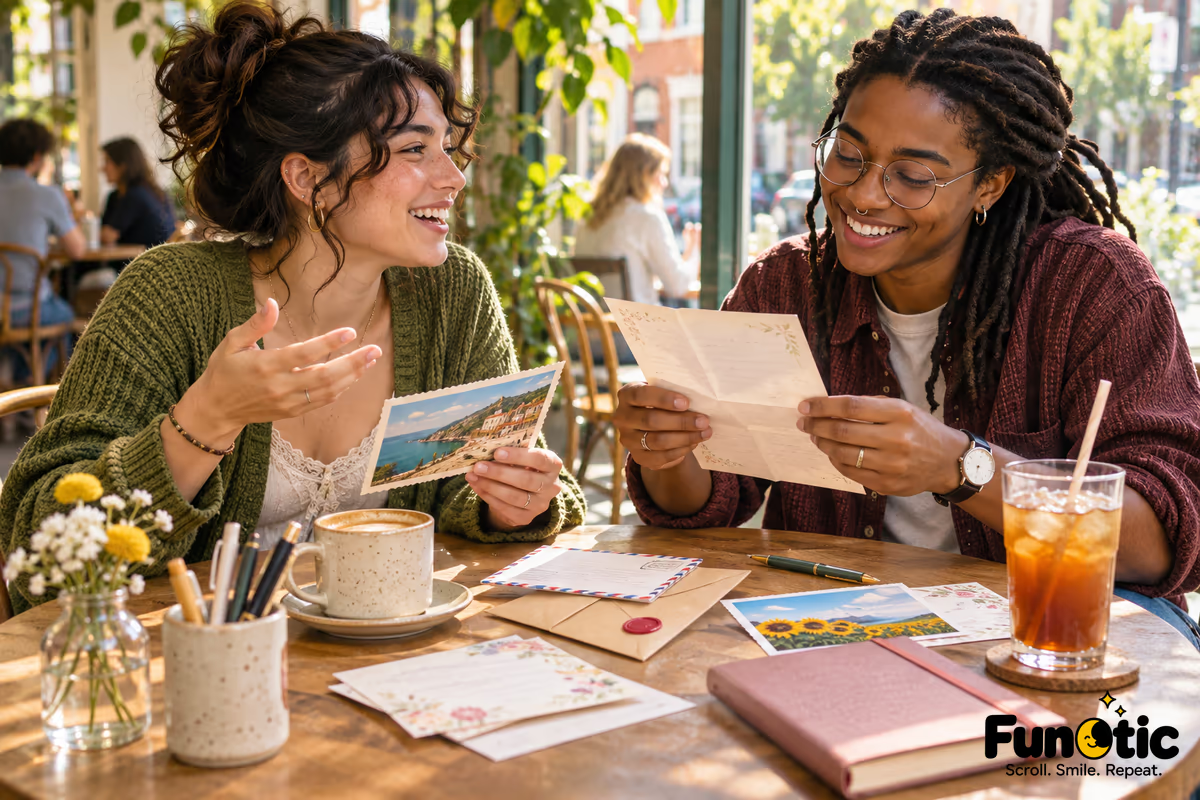
A pen pal habit does not need to become a craft project or a productivity goal. Write when you have something you want to share, keep a few prompts nearby for quiet weeks and reuse supplies you already own. Over time, the letters can become a small record of books, places and ordinary days. Start with one note, send it safely and let the exchange find its own pace. Funotic’s Life section has more ideas for creative routines and hobbies.